
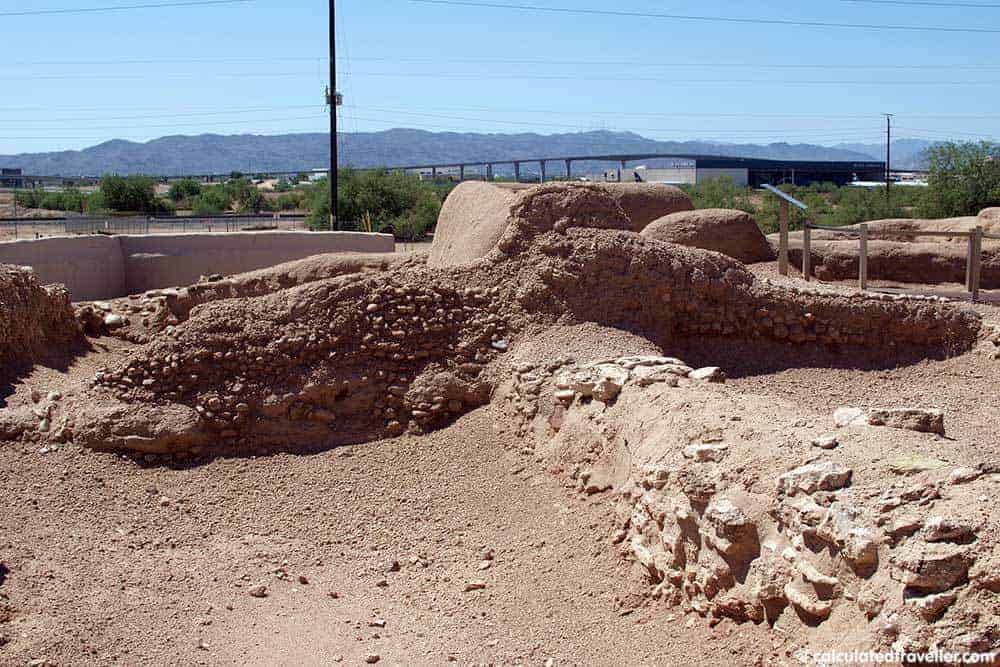
It may look like "just" dirt & rocks but what lies in the 1,500-year-old Hohokam village ruins at the S'edav Va'aki Museum in Phoenix Arizona is a mystery.
It may look like “just” dirt and rocks, but what lies within the 1,500-year-old Hohokam village ruins at the 95-acre park is a mystery. Archaeologists debate what happened to this Native American tribe and why they abandoned the area around AD 1450 after living there for over 1,000 years. Many believe the Akimel O’odham (Pima) and the Tohono O’odham (Papago) are their descendants, but why did they leave, and where did they go? Was it environmental reasons, conflict and war, disease, or did they just need more space?
Located downtown less than a mile from Phoenix Sky Harbour International Airport, the S’edav Va’aki Museum (previously known as the Pueblo Grande Museum and Archaeological Park) has been dedicated to studying the indigenous Hohokam Indian culture since 1929. In continuous operation for over 80 years, the park and museum were designated a National Historic Landmark in 1964.
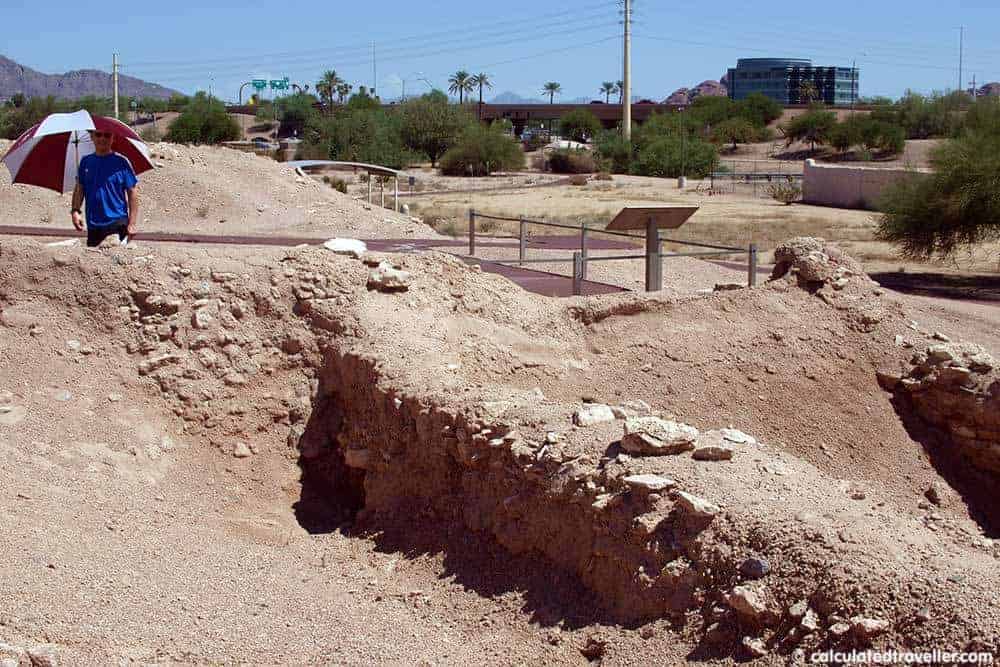
Hohokam – comes from the Akimel O’odham (Pima) term for “those who have gone”
Museum staff suggested that the best way to tour the site is to walk the 2/3-mile interpretive trail around the ruins first, then return inside to view the Museum displays.
The trail is self-guided, and the path is well marked and paved, with descriptive, educational signs throughout.
Trail highlights include the platform mound (AD 1450), adobe compound reproduction, pit house reproductions, ball court and garden.
Inside the Museum, an orientation video, an interactive archaeology gallery, a landscape and Hohokam lifestyle gallery with art, pottery, tools, and jewellery on display, and a changing exhibit gallery featuring the region’s history and archaeology.
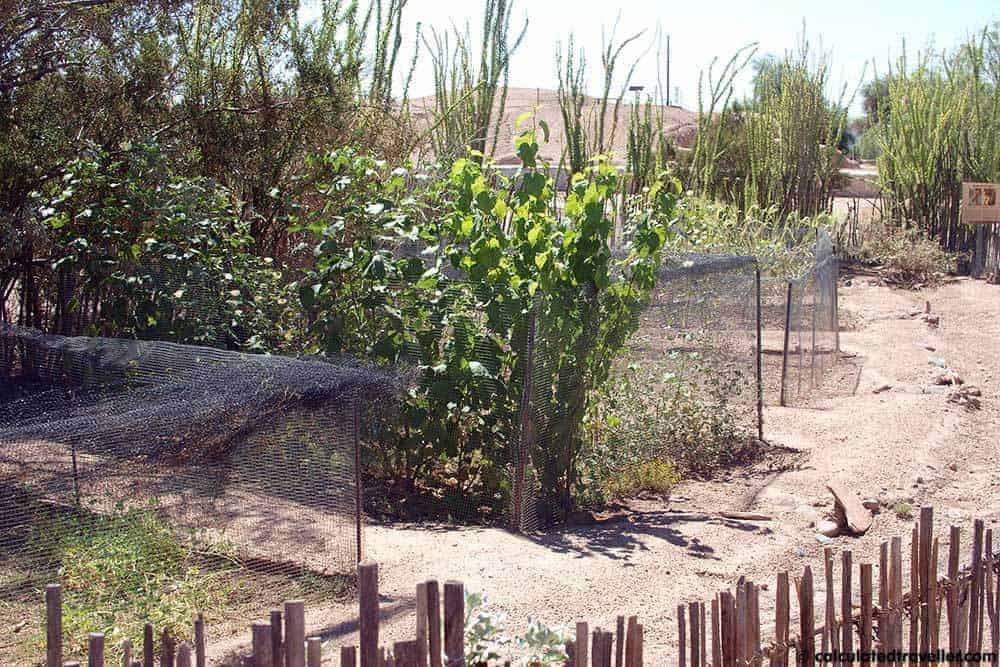
The Garden
The Hohokam people were expert farmers (cotton, corn, squash, amaranth, and beans), but they were also expert engineers who built over 1,000 miles of canals to irrigate their fields. You would have walked past the historic canals at the beginning of the trail, but in-depth tours of the remnants of these canals – the “Park of Four Waters” – are available only on specific days (see contact info below).
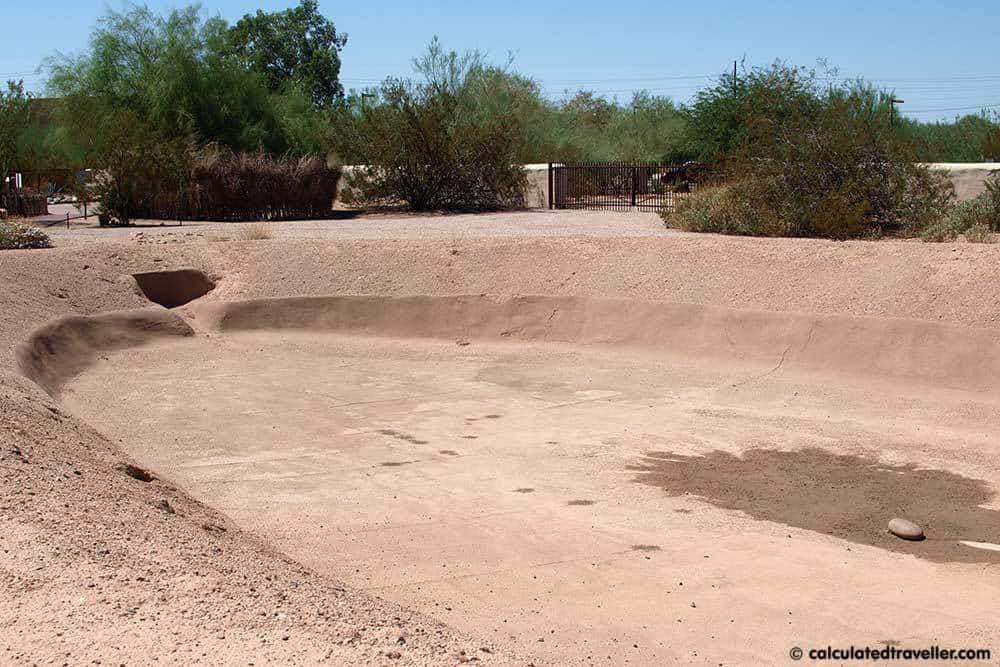
Excavated Hohokam ballcourt
Pithouses – full-scale replica
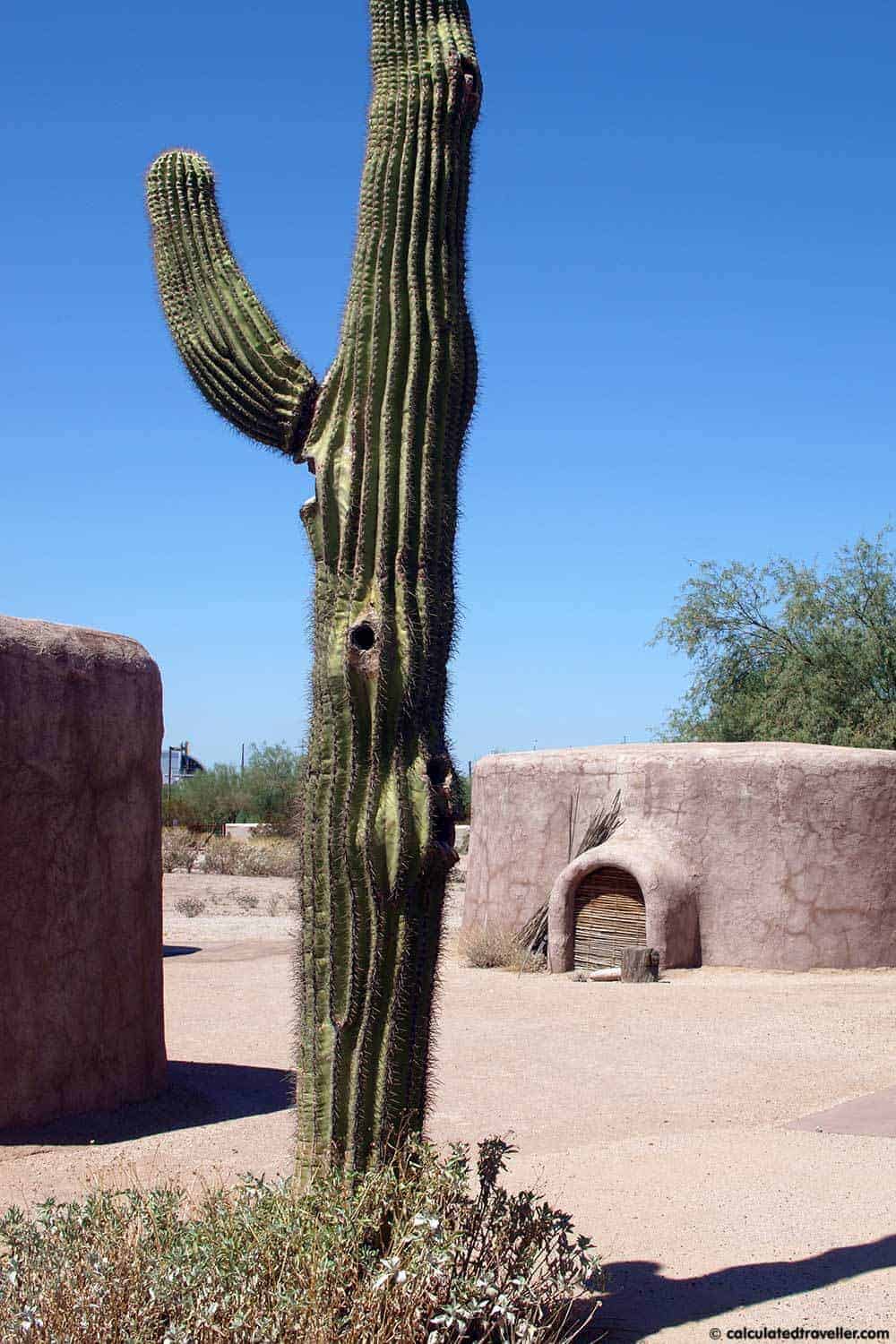
Saguaro cactus was a multipurpose item to the Hohokam:
– They ate the fruit
– The fruit seeds were ground into flour
– The “ribs” of the cactus were dried and used as building materials
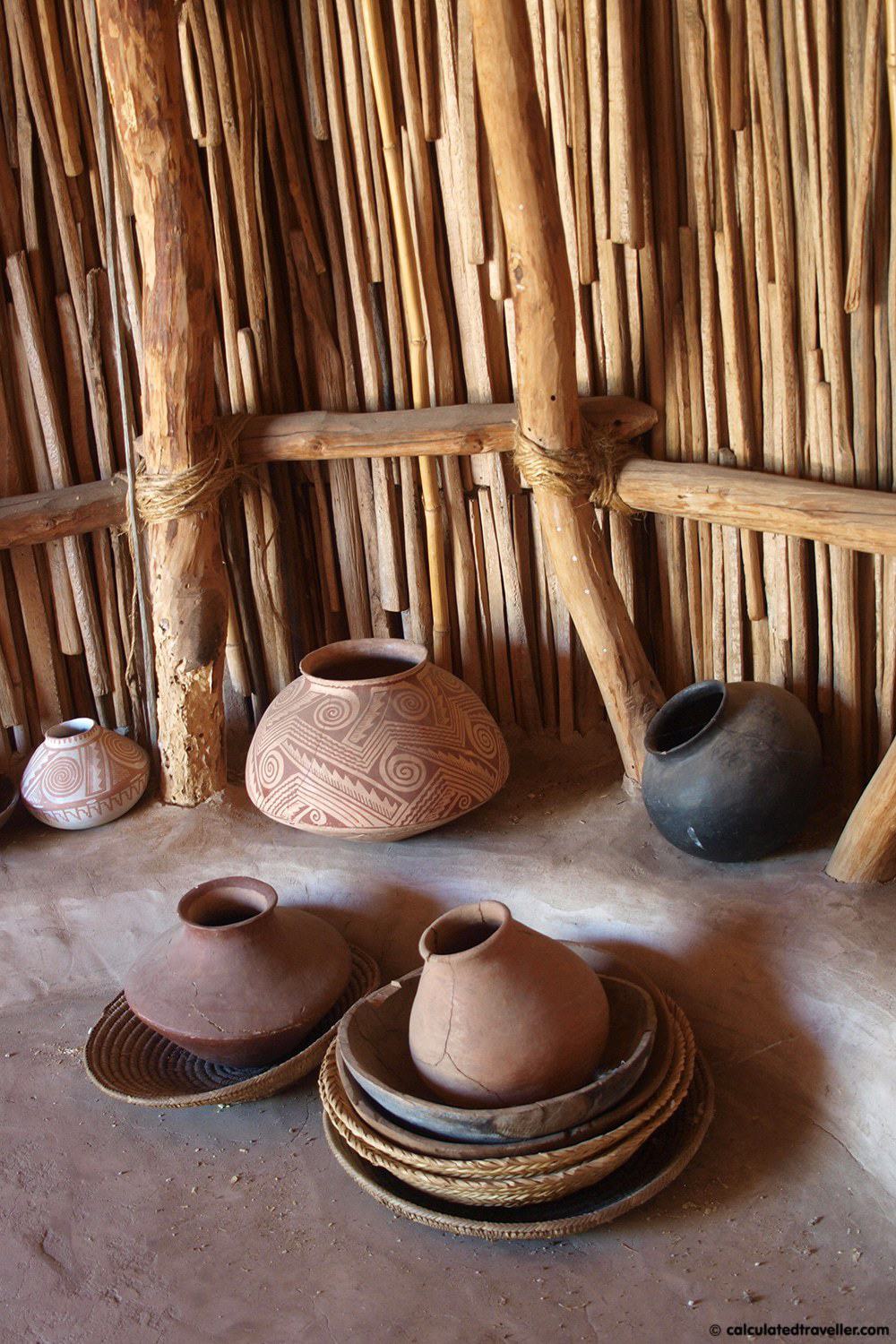
Inside one of the adobe compound full-scale replicas
We really enjoyed learning about the Hohokam people, their history, and their role in the birth of Phoenix at the Pueblo Grande Museum and Archaeological Park. The canals the Hohokam engineered to survive are directly responsible for the settlement of Phoenix and are still partly in use today. I wondered what the Hohokam imagined for the future of this area as I stood there in the middle of the ruins, looking up at the planes flying over my head and listening to the sound of the cars driving by on the nearby Hohokam Expressway 143.
Tips:
- Allow 1 1/2 hours for your visit.
- Umbrellas are available at the entrance to the trail. Take one – trust me – there is little to no shade along the trail.
- There is a gate to lead you back to the museum after the garden (stop 5 on the guide map). It is not necessary to go all the way back to the beginning of the trail.
S’edav Va’aki Museum
4619 East Washington Street
Phoenix, AZ
Tel: 602-495-0901
Visit https://www.phoenix.gov/administration/departments/sedav-vaaki.html for hours of operation, lectures, programs, workshops and special events listings.
Note: Thank you to S’edav Va’aki Museum and Scottsdale Convention and Visitors Bureau for complimentary admission in exchange for this review. The opinions expressed, positive and/or negative, are entirely those of the author and are not a reflection of the compensation received.
For more adventures in the area, read:
– Living in Two Worlds at the Heard Museum in Phoenix, Arizona
– Exploring the World – Musical Instrument Museum in Phoenix Arizona
How to be a Calculated Traveller?
Get the most “bang for your buck” without wasting time - check out these helpful resources that could save you some money:
• Save on exchange rates and fees with a Wise Multi-Currency Card. Withdraw from ATMs in local currency and use your card throughout your trip or when trip planning online in 40+ currencies and 200+ countries.
• Search and save on your next FLIGHT.
• Search and save on your next CRUISE holiday.
• Save on ACCOMMODATION costs from hostels to luxury hotels.
• Search for affordable tours and day trips on VIATOR or GET YOUR GUIDE.
• Explore hands-free - search for LUGGAGE STORAGE locations.
• Save on data and stay connected on your trip with a TRAVEL E-SIM.

